FiveM Resource Optimization: Writing Scripts That Cost Nothing
The difference between a 0.00ms resource and a 2ms one is rarely clever code. It is not running code at all when nothing is happening. Here are the patterns that get you there.
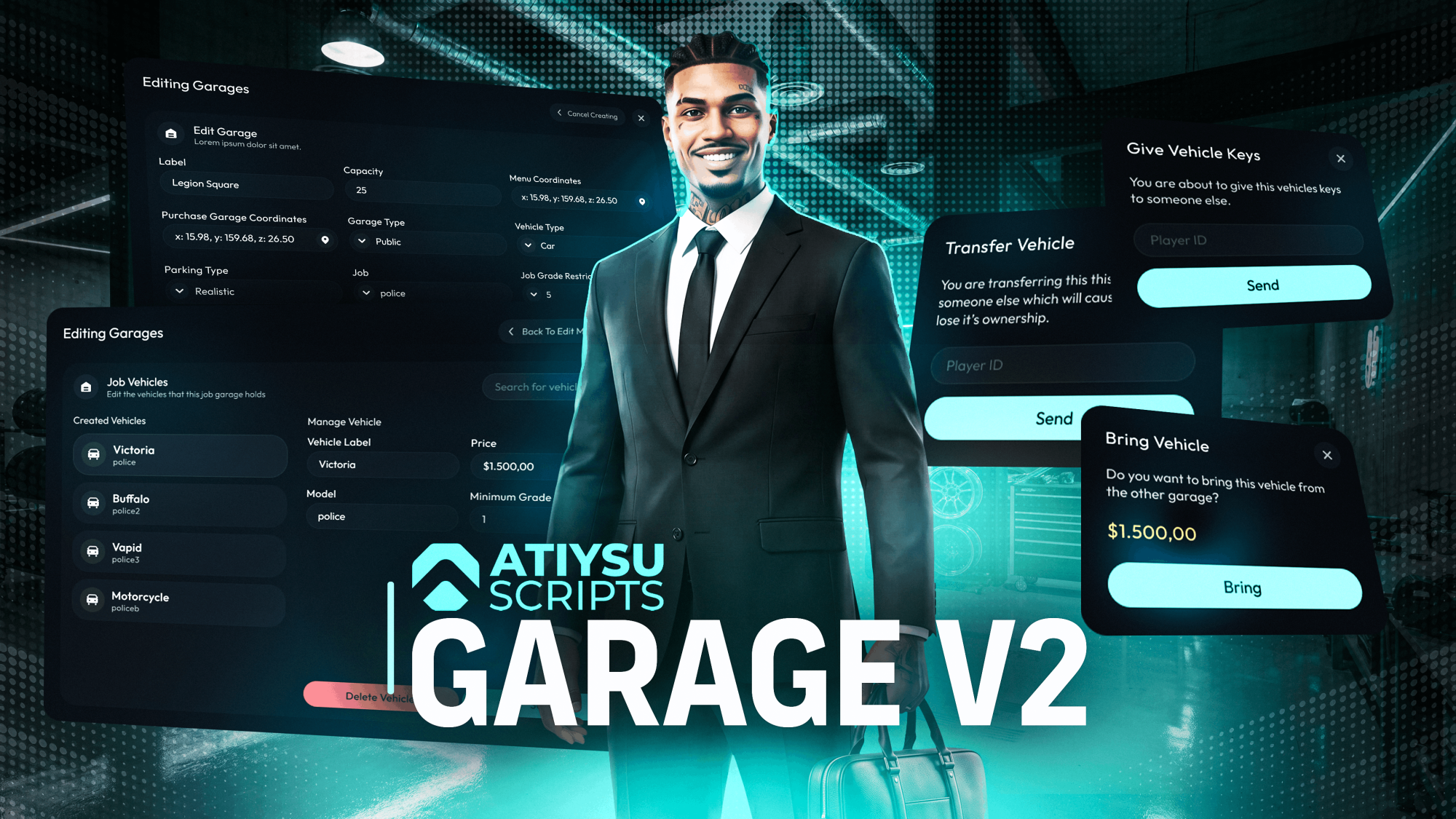
Descubre artículos, tutoriales y noticias sobre nuestros productos. Mejora tu servidor de RP con nuestros recursos premium.
The difference between a 0.00ms resource and a 2ms one is rarely clever code. It is not running code at all when nothing is happening. Here are the patterns that get you there.
A garage is a vehicle table, a storage zone and a retrieval zone. Here is what each part does, what breaks when they disagree, and how to place garages without editing code.
A line-by-line walkthrough of a FiveM server.cfg: endpoints, convars, license key, database string, ensure order, permissions and how to keep secrets out of it.
How to map where money enters and leaves your FiveM server, price jobs by time, add sinks players accept, and catch inflation before it ruins your roleplay.
How Lua and your HTML UI actually talk in FiveM: SendNUIMessage, NUI callbacks, focus handling, security and the mistakes that leave players stuck.
Every roleplay server needs an emote menu, and players use it more than almost any other UI. Here is what separates a good one from a list of animations.
ox_inventory is the default inventory for a huge share of FiveM servers. Its logic is solid, its default look is not for everyone. Here is how to approach a redesign.
Most FiveM mapping still happens in CodeWalker on a desktop. In-game map editors and prop placers change that workflow. Here is when each one makes sense.
How ATY Mechanic turns tuning into a real job: live previews for customers, quotes and work orders for mechanics, plus wear, towing, plates and an underground shop.
How FiveM's ACE system works, how to build a clean admin hierarchy in server.cfg, and how to check permissions safely in your own Lua resources.
A practical backup plan for FiveM servers: which files and databases matter, how to automate dumps, where to store them, and how to test a restore.
How to use entity, player and global state bags in FiveM Lua to replicate data cleanly, react to changes, and keep the server in charge.
Most money exploits on FiveM servers come from server events that trust whatever the client sends. Here is how to validate who, where, when and how much.
The difference between a 0.00ms resource and a 2ms one is rarely clever code. It is not running code at all when nothing is happening. Here are the patterns that get you there.
Server lag is measured, not guessed. How to read resmon, find the resources actually costing you frames, and fix the three causes behind most FiveM performance complaints.
A job is a definition, a grade ladder, a way to get hired and something to actually do. Most servers get the first three right and the fourth wrong.
A garage is a vehicle table, a storage zone and a retrieval zone. Here is what each part does, what breaks when they disagree, and how to place garages without editing code.
Both are free, mature and widely supported. The real differences are how much ships out of the box, where items live, and how much of your server you end up writing yourself.
From a Cfx.re license key to players connecting: server artifacts, database, framework choice and the config lines that decide whether anyone can join.
ESX installs hinge on three things the readme rarely spells out: which ESX version you run, where items live, and how the shared object is obtained. Here is all three.
QBCore scripts need more than an ensure line: shared item entries, job definitions and the right start order. This is the QBCore-specific half of a script install.
Every FiveM script installs the same way: drop the folder in resources, start it in server.cfg, restart. Here is the full process, plus the four mistakes that cause most "resource not found" errors.